
Pool losing water fast?
We locate and repair pool leaks across Carson, from plumbing lines to shell cracks.
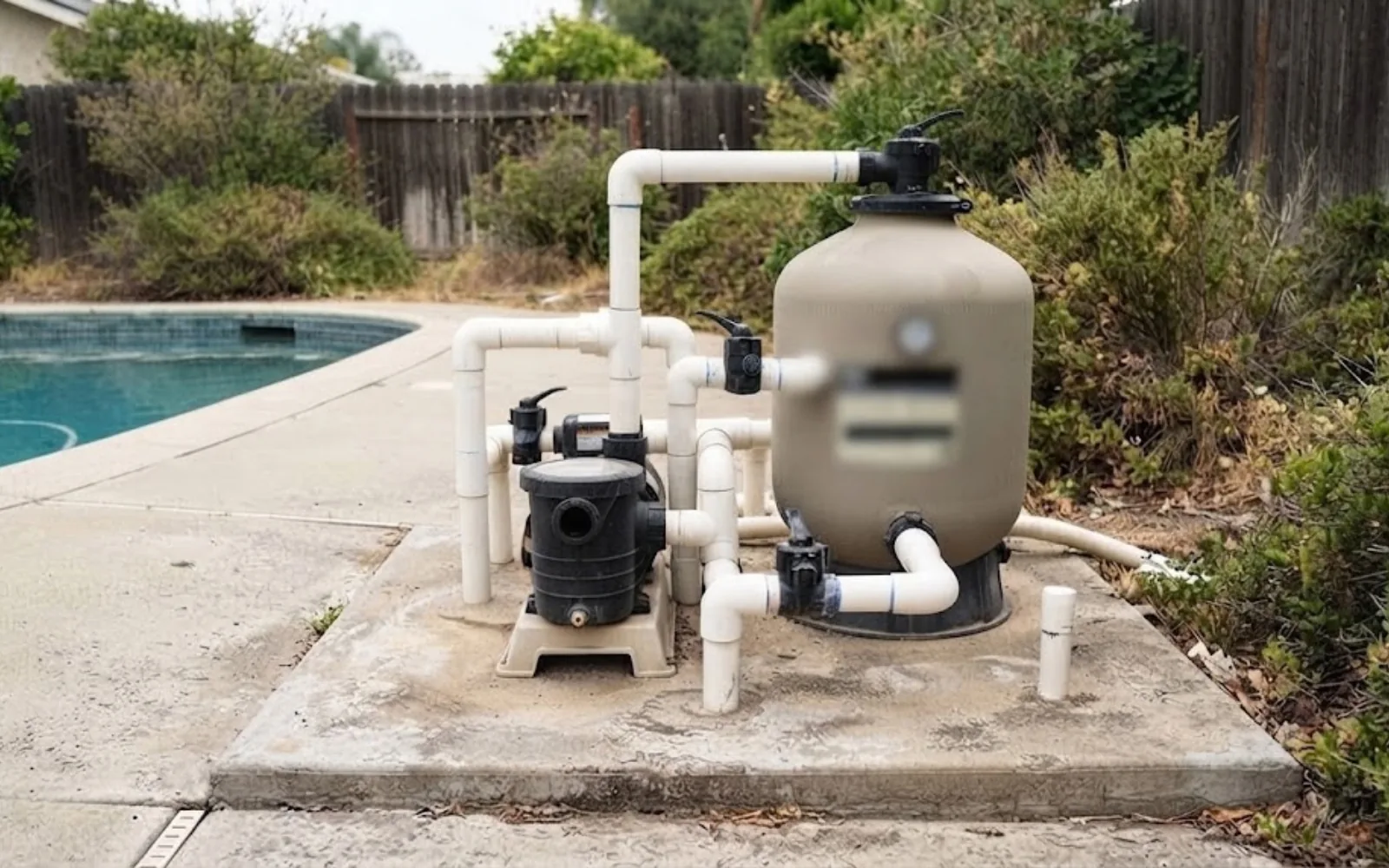
Topping Off the Pool More Than Usual?
Southern California's warm climate means real evaporation, typically a quarter to half an inch of water loss per day in summer, but water loss beyond that points to an actual leak somewhere in the pool's shell, plumbing, or equipment. The bucket test is a simple first check: place a bucket filled to the pool's waterline on a step, mark both water levels, and compare the drop after 24 hours. If the pool loses noticeably more than the bucket, there's a real leak to find.
Pool leaks come from a handful of common points: cracks in the shell or tile line, worn seals around skimmers and return outlets, a cracked pool light housing, or a break in the underground plumbing running to the equipment pad. Finding the exact source before repairing anything is what separates a permanent fix from a repair that doesn't hold.
Signs Your Pool Has a Leak
Failing the Bucket Test
Losing noticeably more water than a control bucket over 24 hours points to a real leak, not evaporation.
Soggy Grass or Spongy Deck
Wet landscaping or a section of deck that feels soft or has started to shift can mean water is escaping underground nearby.
Air Bubbles From Return Jets
Air in the returns often means a suction-side plumbing leak drawing air into the system.
Rising Chemical Costs
Constantly refilling with fresh water dilutes chemical balance, driving up how much you need to add to compensate.
Pool Leak Detection Around Carson
Carson has a meaningful number of single-family homes with in-ground pools, particularly in the tract-home neighborhoods built from the 1960s onward, and pool plumbing from that era is now decades past its original installation. Underground pool lines, along with skimmer and return fittings, are common failure points as the surrounding soil shifts slightly over the years and original seals age out.
We use acoustic listening equipment and pressure testing on the pool's plumbing lines to pinpoint a leak's location before recommending any repair, the same non-invasive approach used for slab leak detection in a home's main plumbing. That avoids breaking into deck or coping on a guess, which is a common and costly mistake when a leak's location isn't confirmed first.
Once located, a plumbing-line leak can often be repaired by accessing the specific point through a small, targeted cut in the deck rather than a wide excavation. Leaks in the shell itself, at the tile line, or around a light housing are typically handled with targeted patching once identified. We'll walk through which category your leak falls into once we've found it, along with a real cost estimate before any repair work starts.
Our Pool Leak Detection Process
Confirm With Testing
A bucket test and visual inspection to confirm a real leak before further diagnostics.
Acoustic and Pressure Testing
Equipment pinpoints the leak's location in the shell, plumbing, or equipment without guesswork.
Identify the Repair Type
Plumbing line, shell crack, or equipment seal, each requiring a different fix.
Targeted Repair
Minimal, precise access to the confirmed leak location rather than broad excavation.
Why Choose Us for Pool Leak Detection
Non-Invasive Detection
Acoustic and pressure testing find the leak before any deck or coping is disturbed.
Experience With Older Pool Plumbing
Familiar with the underground lines and fittings common in Carson's tract-home pools.
Clear Repair Options
An honest explanation of what's actually leaking and what it takes to fix it.
Free Estimates
A clear price for the confirmed repair before any work begins.
What Affects the Price of Pool Leak Detection & Repair
We can't give an accurate number without seeing the job, but these are the real factors that move the price up or down.
Plumbing leak vs. shell or equipment leak
Each type needs a different detection approach and repair method, which affects overall cost.
Direct repair vs. rerouting
Rerouting an underground pool line avoids breaking the deck but adds material for the new path.
Equipment pad accessibility
An easily accessible pad costs less to inspect and service than one in a tight side-yard space.
In Southern California's summer heat, a quarter to half an inch of water loss per day is typical from evaporation alone. Losing significantly more than that, confirmed with a bucket test, usually means a real leak.
In most cases, yes. Acoustic and pressure testing locate the leak with the pool still filled, and repairs are typically targeted to the confirmed location rather than a broad search.
Aging underground plumbing lines and worn skimmer or return seals are the most common causes we see in Carson's tract-home pools, many of which are decades old.
We do both. Once the leak is located, we'll explain the repair options and can complete the fix, whether that's a plumbing line repair, a shell patch, or a seal replacement.