
Every pool owner in Southern California deals with evaporation, especially during the hotter months. The question that actually matters isn't whether your pool is losing water, it's whether it's losing more than evaporation alone would explain. That distinction is the difference between a normal seasonal top-off and a real leak that needs to be found and fixed.
The Bucket Test
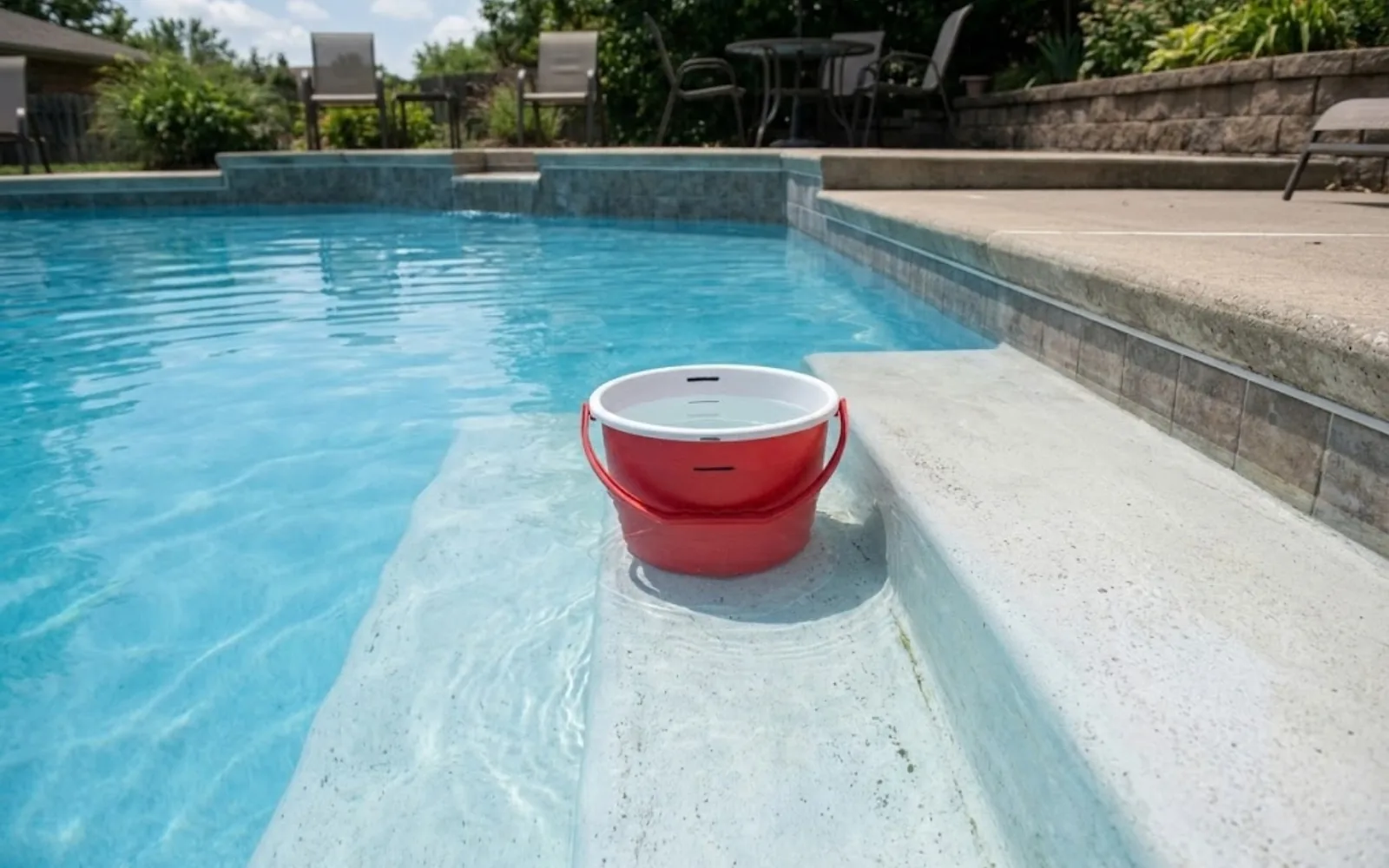
This is the standard method for separating evaporation from a genuine leak, and it takes about 24 hours to get a reliable answer. Fill a bucket with pool water and place it on the top step of the pool so it's partially submerged, keeping the water level inside the bucket even with the pool's water level. Mark both water levels clearly, then check back in 24 hours.
If the pool's water level has dropped roughly the same amount as the water inside the bucket, that drop is evaporation, a normal process affecting both the bucket and the pool equally. If the pool has dropped noticeably more than the bucket, water is escaping somewhere beyond simple evaporation, and that's a real leak worth investigating.
Typical Evaporation Rates
In Southern California's summer heat, it's normal for a pool to lose somewhere between a quarter and half an inch of water per day to evaporation alone, more during periods of high wind or particularly hot, dry weather. If you're topping off significantly more than that on a regular basis, and the bucket test confirms it isn't just evaporation, it's time to look for the actual source.
Other Signs Pointing to a Real Leak
- Soggy grass or a spongy section of deck near the pool, even without recent rain.
- Air bubbles coming from return jets, which often means air is being drawn into a suction-side plumbing leak.
- Cracks appearing in the pool deck or a section that seems to be settling unevenly.
- Rising chemical costs, since constantly refilling with fresh water dilutes your chemical balance and forces more frequent rebalancing.
- A noticeable, sudden drop rather than a slow, steady one, which can indicate a more significant break rather than a small, gradual leak.
Where Pool Leaks Actually Come From
Once a real leak is confirmed, the source is usually one of a few common points: a crack in the pool's shell or along the tile line, a worn seal around a skimmer or return outlet, a cracked light housing, or a break in the underground plumbing that connects the pool to its equipment pad. Each of these needs a different repair approach, which is why finding the exact location matters before any repair work starts.
Non-invasive detection methods, acoustic listening equipment and pressure testing on the plumbing lines specifically, locate the leak without draining the pool or guessing at where to start digging. This is the same basic approach used for leak detection in a home's main water lines, applied to a pool's specific plumbing layout.
Once the leak's location and type are confirmed, pool leak detection and repair can proceed with a targeted fix, whether that's a small, precise cut in the deck to access a plumbing line or a patch to the shell itself, rather than an exploratory search that ends up costing more in unnecessary demolition than the actual repair would have.
This is a common call throughout Torrance's tract-home neighborhoods too, where a lot of in-ground pools installed in the 1960s and 1970s are now old enough that original plumbing and seals are reaching the end of their expected service life.
Before You Call
- Run the bucket test and note the results from both the pool and the bucket.
- Check for soggy areas, deck cracks, or air in the return jets.
- Note approximately how much water you've been adding weekly.
- Check the pool's age and whether any plumbing or equipment work has been done recently.
Having this information ready helps a technician narrow down the likely leak type before they even arrive, which usually means a faster path to an accurate diagnosis.
Why Draining the Pool to Find a Leak Usually Backfires
It's tempting to think draining the pool would make a leak easier to spot, but this is one of the more common and costly mistakes homeowners make before calling a professional. An empty in-ground pool loses the water weight that normally counteracts groundwater pressure pushing up from underneath and around the shell. In areas with a higher water table or after recent rain, that hydrostatic pressure can actually push an empty pool shell upward out of the ground, a problem far more expensive than the original leak.
Non-invasive leak detection methods exist specifically so the pool never has to be drained to find the problem. Acoustic and pressure testing work with the pool full, which is both safer for the pool's structure and faster than an empty-and-inspect approach that carries real risk of its own.
What If the Leak Is in the Equipment, Not the Pool Itself?
Not every pool leak is in the shell or the underground plumbing. Pumps, filters, and heaters at the equipment pad have their own seals and connections that can develop leaks over time, and these are often easier to spot since the equipment pad is above ground and visible. A damp patch consistently appearing near the pump or filter housing, rather than out in the yard near the pool itself, usually points to an equipment-side leak rather than a shell or underground plumbing issue, and it's typically a more straightforward repair once identified. Checking o-rings and unions at the equipment pad is often one of the first steps in a full inspection, precisely because it's quick to rule in or out before moving on to the more involved plumbing and shell checks.
Where Carson Pro Plumbing Works
Confirmed a Real Leak?
We locate and repair pool leaks without draining the pool or tearing up the deck.
📞 Call (310) 424-7510