
Most of the Los Angeles basin, Carson included, draws from a regional water supply that falls into the hard to very hard range on standard water hardness scales. That's not a safety issue. Hard water is perfectly safe to drink and use. But the higher mineral content, mostly calcium and magnesium, has real, cumulative effects on plumbing and appliances that show up gradually rather than all at once.
What Hard Water Actually Does
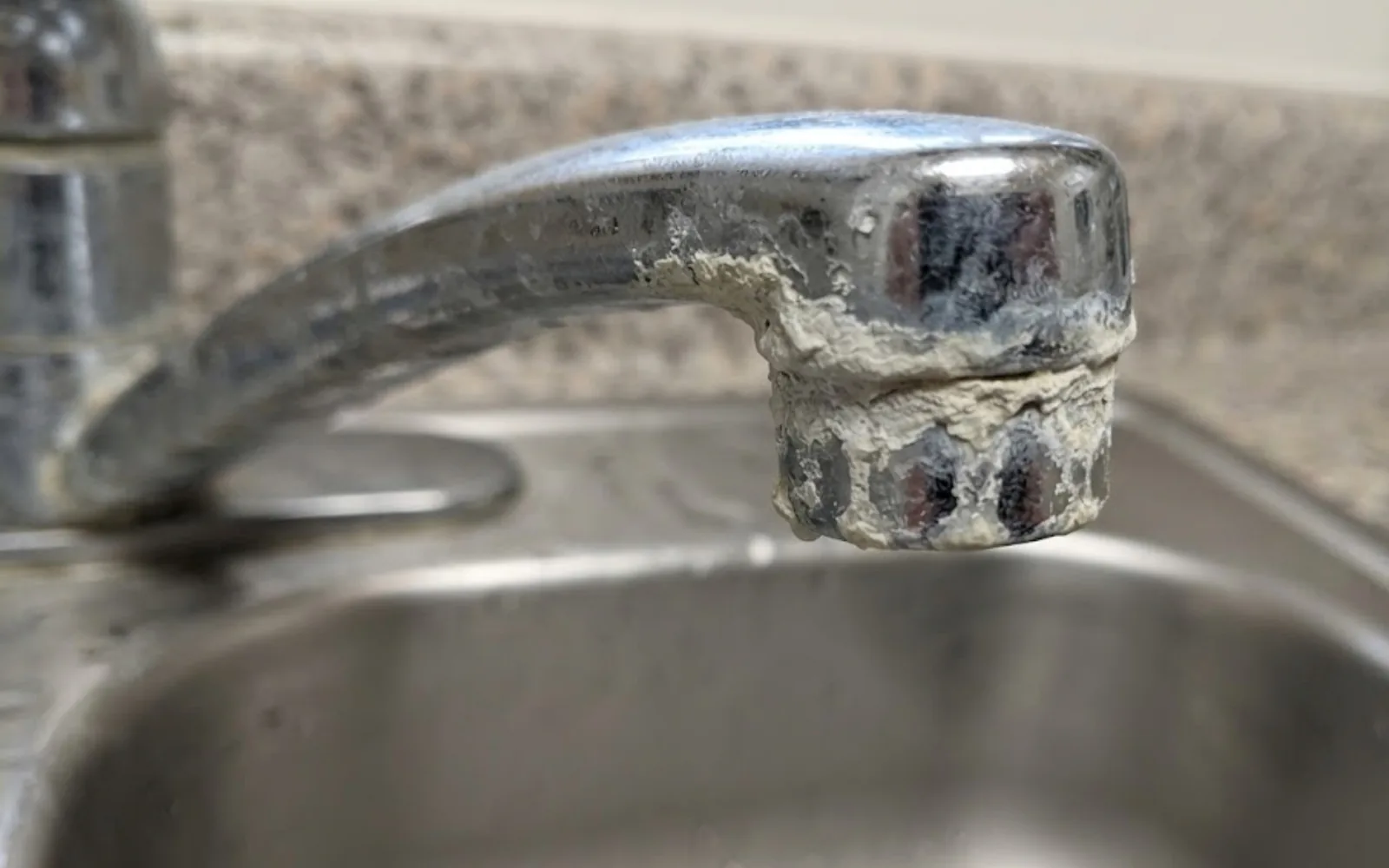
As hard water moves through pipes, fixtures, and appliances, the dissolved minerals slowly precipitate out and stick to surfaces, especially where water sits or where temperature changes encourage mineral deposits to form. Inside a water heater's tank, this shows up as sediment buildup on the bottom, the same buildup responsible for the popping and rumbling sounds a lot of homeowners eventually notice.
Inside pipes and fixtures, mineral scale narrows the internal diameter over years, gradually restricting flow. A faucet aerator that's lost pressure isn't necessarily failing, it's often just clogged with mineral deposits that have built up inside the fine mesh screen. The same thing happens inside shower heads, which is why a shower head that sprayed evenly a year ago sometimes develops uneven, sputtering spray patterns over time.
The Appliance Impact
Dishwashers and washing machines both take a real hit from hard water over their working lives. Internal components that handle water, valves, heating elements, pumps, accumulate scale the same way a water heater's tank does, and that buildup is a common contributor to appliances needing repair or replacement earlier than their rated lifespan would suggest.
Tankless water heaters are especially sensitive to this. Their heat exchangers have much narrower internal passages than a standard tank, and manufacturers generally recommend descaling a tankless unit annually specifically because of how quickly hard water scale can accumulate in that tighter space. Skipping this maintenance is one of the more common reasons a tankless water heater loses performance well before it should.
Signs You're Dealing With Hard Water Damage
| What You're Noticing | Likely Cause |
|---|---|
| White spots on dishes and glassware | Mineral deposits drying on the surface |
| Filmy residue on shower doors | Scale buildup from repeated water contact |
| Weak or uneven shower spray | Mineral clogging in the shower head |
| Popping sounds from the water heater | Sediment layer at the bottom of the tank |
What Actually Helps
A whole-home water softener treats hardness at the source, before water reaches any fixture or appliance in the house. This is the most direct fix for the scale-related problems described above, since it addresses the mineral content itself rather than treating each downstream symptom separately.
A water softener or filtration system is sized based on your household's actual water use and the specific hardness level in your water, which is why a proper installation starts with testing rather than assuming a generic regional average applies to your home exactly.
Households throughout Compton deal with the same regional water hardness, so the same buildup patterns and the same fixes apply there just as much as in Carson itself.
Quick Self-Check
- Check faucet aerators and shower heads for visible white or chalky buildup.
- Note how old your water heater is and whether it's started making noise.
- Look at glassware after a dishwasher cycle for persistent spotting.
- Consider how often you're already descaling or cleaning fixtures to keep up with buildup.
If several of these sound familiar, hard water is very likely playing a role, and a proper hardness test is the quickest way to confirm it and figure out what level of treatment actually makes sense for your home.
How a Water Softener Actually Works
A standard whole-home softener uses a process called ion exchange. Water passes through a tank filled with resin beads coated in sodium ions, and as calcium and magnesium in the hard water pass through, they swap places with the sodium on the resin. The water leaving the tank carries a small amount of sodium instead of the hardness-causing minerals, and the softener periodically flushes the resin with a saltwater brine solution to recharge it for the next cycle.
This is a different mechanism than filtration, which physically removes particles, chlorine taste, or specific contaminants but doesn't chemically alter mineral content. That's why a filtration system alone won't stop scale buildup the way a softener will, and why a household dealing specifically with hardness symptoms, spotting, scale, appliance wear, needs a softener rather than a filter to address the actual cause.
Hard Water's Effect Beyond Plumbing
The plumbing and appliance effects get most of the attention, but hard water also affects laundry and, for some people, skin and hair. Clothes washed repeatedly in hard water can feel stiffer and look duller over time, since mineral deposits settle into fabric fibers along with the detergent. Some people also notice drier skin or hair after showering in hard water, since the minerals can interfere with how thoroughly soap rinses away.
Neither of these is dangerous, but they're often the first things a household notices before connecting the pattern back to water hardness specifically.
Salt-Based vs. Salt-Free Systems
Traditional softeners use the salt-based ion exchange process described above, and they're the most effective option for genuinely hard water since they actually remove the minerals causing the problem. Salt-free systems, sometimes marketed as conditioners, use a different technology that alters mineral structure rather than removing it, which can reduce scale buildup somewhat but doesn't soften water the way a true softener does. For a household dealing with the level of hardness common across the Los Angeles basin, a salt-based system is generally the more reliable fix, though a salt-free option can be worth considering for households wanting to avoid added sodium in their water for other reasons.
Where Carson Pro Plumbing Works
Ready to Deal With Hard Water for Good?
Get a real water hardness test and a system recommendation that fits your home.
📞 Call (310) 424-7510