
Galvanized steel pipe was the standard for residential water supply lines for much of the 20th century, and a meaningful share of Carson's older housing stock, particularly homes built before 1960, still has some of it in place. The pipe itself is steel with a zinc coating meant to slow corrosion, and that coating wears down over decades of use, eventually leaving bare steel exposed to water on the inside of the pipe.
Once that happens, the pipe starts to rust from the inside out. The rust builds up along the interior wall, narrowing the usable diameter and eventually causing the kinds of problems that bring a lot of Carson homeowners to search for leak detection in the first place: falling water pressure, discolored water, and pipes that fail at seemingly random points.
Three Ways to Check What's in Your Walls
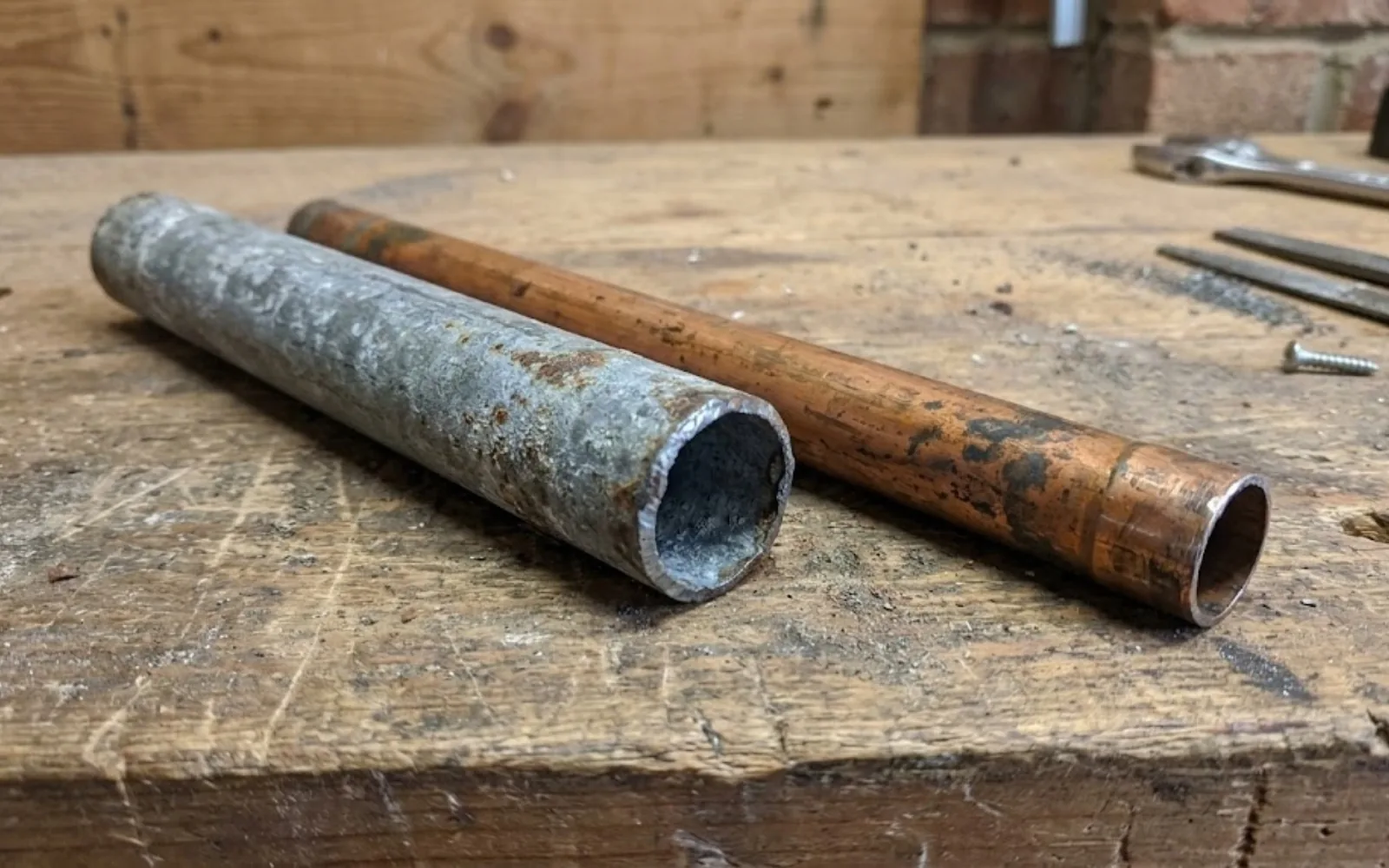
You don't need to open up drywall to get a good first read on your plumbing material. Start with the exposed pipe you can actually see, usually under a sink, in a garage, or near the water heater.
Look at the color and finish first. Galvanized pipe is a dull gray, sometimes with a slightly rough or scaly texture where corrosion has started. Copper pipe has a warm, reddish-brown tone that's hard to mistake once you've seen both side by side. PEX, a flexible plastic tubing common in newer installations, is usually white, red, or blue.
Next, try the magnet test. A standard refrigerator magnet will stick to galvanized steel pipe. It will not stick to copper or PEX. This single test resolves most of the uncertainty in under a minute, and it's the same basic method plumbers use themselves when a pipe's identity isn't obvious at a glance.
Finally, check your home's age and permit history if you have it. Galvanized pipe was the default choice for water supply lines in most of the country until roughly the 1960s, when copper became more standard, and later PEX. A Carson home built in 1955 is far more likely to have some galvanized pipe remaining than one built in 1985, though partial replacements over the years mean a single home can have more than one material present.
| Material | Appearance | Magnet Test | Common Install Era |
|---|---|---|---|
| Galvanized Steel | Dull gray, may look rough or scaly | Sticks | Before ~1960 |
| Copper | Reddish-brown, penny-like when scratched | Does not stick | ~1960s onward |
| PEX | Flexible plastic, white/red/blue | Does not stick | 2000s onward |
What to Do If You Find Galvanized Pipe
Finding galvanized pipe in your home isn't an emergency by itself. Plenty of galvanized systems still function, just with reduced pressure and an elevated risk of failure compared to copper or PEX. What matters more is how the pipe is actually performing: rusty water at first use in the morning, a noticeable pressure drop compared to a few years ago, or more than one unrelated leak in the past year or two are all signs the pipe is past the point where patching individual sections makes sense.
A full whole-home repipe replaces the aging galvanized lines with copper or PEX throughout the house, which resolves the underlying corrosion problem rather than treating each new leak as it appears. It's a bigger project than a single repair, but for a home with galvanized pipe that's already causing regular problems, it's usually less expensive over a few years than repeated emergency calls for the same underlying cause.
This pattern shows up just as often in Torrance's older neighborhoods as it does in Carson, since both cities have significant housing stock from the same postwar construction boom.
A Quick Checklist Before You Call
- Check exposed pipe near the water heater or under a sink for color and finish.
- Try a refrigerator magnet on any pipe you're unsure about.
- Note your home's approximate build year, if known.
- Write down when pressure or discoloration issues started, and whether they're getting worse.
- If you've had more than one unrelated leak in the past year, mention that when you call.
Having this information ready before a technician arrives helps them give you a faster, more accurate read on the situation, whether that turns out to be a simple repair or a bigger conversation about repiping.
Can You Mix Copper and Galvanized Pipe?
A lot of older homes end up with a mix of both, usually from a partial repair done years ago rather than a full replacement. This is workable, but only if it's done correctly. Joining copper directly to galvanized steel creates a galvanic reaction between the two different metals, which accelerates corrosion right at that connection point far faster than either metal would corrode on its own.
The standard fix is a dielectric union, a fitting designed specifically to separate the two metals electrically while still allowing water to pass through normally. If you've had a partial repair done in the past and aren't sure whether a proper dielectric union was used, that connection point is worth having a plumber check, since a missing or failing union at a copper-to-galvanized joint is a common spot for an unexpected leak to show up years after the original repair.
How This Plays Out Over Time
A home with a mix of galvanized and newer pipe rarely fails all at once. More often, one section fails, gets patched or replaced, and then a different section fails a year or two later as the rest of the original galvanized system continues aging on the same timeline. This pattern of recurring, unrelated repairs is usually what finally convinces a homeowner that a full repipe makes more sense than another round of patching, since each individual fix only buys time on a system that's aging uniformly throughout the house.
Where Carson Pro Plumbing Works
Think You Might Have Galvanized Pipes?
Call for a professional assessment and honest advice on repair versus repiping.
📞 Call (310) 424-7510